

Optional H2 Subhead
Provider Update December 2025
Jump to section:Medical policies | General information | Medicare Advantage | Commercial and FEP | Value-based care | Security corner
Welcome to our new Update Newsletter format where information for our medical, dental and Medicare Advantage products is included in one publication.
New and updated medical policies
Effective Dec. 1, 2025:
- IV.85 - Low Dose Radiation for Osteoarthritis or Plantar Fasciitis
- M.14 - Amniotic Membrane and Amniotic Fluid
- M.28 - MA Low Dose Radiation Therapy for Osteoarthritis and Plantar Fasciitis (RECOMMENDED)
General information
Important update: Paper remittance advices and checks discontinued
On Oct. 1, 2025, Blue Cross and Blue Shield of Nebraska (BCBSNE) transitioned to electronic remittance advices and payments.
Key Reminders:
- Paper remittance advices are no longer issued. Providers must access 835s through a clearinghouse or view remittance advices in NaviNet.
- Paper checks are no longer an option. Providers must be enrolled in electronic funds transfer (EFT) to receive payments.
- Forms are available on NaviNet. Under the Resources section in Plan Central, please visit the Administrative Updates/Secure Forms section to complete EFT and electronic remittance advice enrollment.
- Dentist exception: Dentists unable to enroll with a clearinghouse may continue receiving paper remittance advices due to limited self-service options in NaviNet.
If you have not yet completed the transition, we urge you to take immediate action to avoid any disruption.
Peer-to-peer changes effective Jan. 1, 2026
BCBSNE is updating its peer-to-peer procedure (GP-P-003) to reflect recent system enhancements and align with Nebraska Legislative Bill 77 (LB77).
We are reversing our previous decision to postpone the shortened peer-to-peer request window. Our systems can now support electronic delivery of denial reasons through our portal, enabling providers to take timely action.
Key updates:
- Request window: Providers will have three business days (72 hours) from the post-denial determination to request a peer-to-peer review for denials deemed not medically necessary on prospective and concurrent reviews.
- Denial access: Denial reasons will now be available in the portal, eliminating delays caused by mailed notifications.
- Physician availability: Providers must offer a two-hour window for the peer-to-peer discussion.
- Missed request window: If a peer-to-peer is not requested within the three-day window, the provider must follow the appeal process.
We appreciate your partnership as we continue to improve transparency and efficiency in the prior authorization process.
New Medical Policies Effective March 2026
Starting in March 2026, new medical policies will go into effect for both Commercial and Medicare Advantage plans. In February 2026, revisions to existing medical policies will also take effect. To ensure a smooth transition and minimize any disruption to your current processes, please review the updated policies below.
MA new polices effective March 1, 2026
- Amniotic Membrane and Amniotic Fluid
- Policy number: M.14
- Summary: Amniotic membrane is covered for specific eye and wound conditions (e.g., diabetic ulcers, corneal ulcers), but amniotic fluid injections are not medically necessary for any indication.
- Benign Prostate Hyperplasia
- Policy number: M.29
- Summary: Covers specific minimally invasive treatments for BPH—such as prostatic urethral lift (Urolift), water vapor therapy (Rezum), and transurethral waterjet ablation—when strict clinical criteria are met, while deeming other procedures (e.g., PAE, cryoablation, HIFU) not medically necessary.
- Single Chamber and Dual Chamber Permanent Cardiac Pacemaker and Defibrillators
- Policy number: M.30
- Summary: Covers permanent pacemakers for symptomatic bradycardia and implantable cardioverter defibrillators (ICDs) for specific high-risk cardiac conditions per CMS NCD criteria, while excluding reversible causes and non-indicated uses.
- Electrophysiology Testing and Cardiac Ablation
- Policy number: M.31
- Summary: Coverage for electrophysiology (EP) testing and cardiac ablation is based on InterQual criteria to determine medical necessity for diagnostic and therapeutic procedures.
- Non-Coronary Vascular Stents
- Policy number: M.32
- Summary: Coverage for non-coronary vascular stent procedures is based on CMS LCD criteria (L35998 and A57590) to determine medical necessity for vascular interventions.
- Cardiac Catheterization
- Policy number: M.33
- Summary: Covers right, left, or combined heart catheterization when clinically indicated for diagnosis or treatment planning of cardiac conditions, while excluding non-indicated uses such as routine angioplasty or electrophysiologic studies.
- Orthognathic Surgery
- Policy number: M.34
- Summary: Covers orthognathic surgery for correction of skeletal deformities causing functional impairment when strict clinical criteria are met, and for obstructive sleep apnea after failure of CPAP; excludes cosmetic indications and procedures lacking proven effectiveness.
- Urinary Incontinence Treatment
- Policy number: M.35
- Summary: Allows periurethral bulking agent injections for stress urinary incontinence meeting specific criteria, while deeming adjustable balloon continence devices and other non-proven treatments not medically necessary.
- Non-invasive Cerebrovascular and Peripheral Arterial Vascular Studies
- Policy number: M.36
- Summary: Coverage for non-invasive cerebrovascular and peripheral arterial vascular studies follows CMS LCD criteria (L35753, A57592, L35761, A57593) to determine medical necessity for diagnostic imaging.
- Echocardiogram, Transthoracic (TTE) and Transesophageal (TEE)
- Policy number: M.37
- Summary: Echocardiogram coverage is based on InterQual criteria, with PA required for TEE but not for TTE, ensuring appropriate use for cardiac evaluation.
- Percutaneous Coronary Intervention (PCI)
- Policy number: M.38
- Summary: PCI procedures are covered when meeting CMS LCD L34761 criteria for medical necessity in coronary artery disease treatment.
- Category III Codes
- Policy number: M.39
- Summary: Category III procedures are generally considered experimental or not medically necessary unless proven safe, effective, and consistent with accepted medical standards.
- Physical Medicine and Rehabilitation
- Policy number: M.40
- Summary: Continued physical therapy beyond 12 visits requires prior authorization and documentation showing functional improvement, medical necessity, and inability to perform therapy independently.
- Prostate Rectal Spacers
- Policy number: M.41
- Summary: Covers prostate rectal spacers (e.g., SpaceOAR) for patients with localized prostate cancer undergoing hypofractionated radiation therapy when strict clinical criteria are met; not medically necessary if criteria are not met.
MA revised policies effective March 1, 2026
- Bioengineered Skin and Soft Tissue Substitutes
- Policy number: M.3
- Summary: Covers bioengineered skin substitutes for diabetic foot ulcers, venous leg ulcers, and certain reconstructive or burn indications when strict LCD criteria and approved product lists are met; all other uses and products are considered non-covered.
- MA Cosmetic and Reconstructive Surgery (Codes Added)
- Policy number: M.5
- Summary: Adds new codes for cosmetic and reconstructive procedures; coverage follows NCD 250.5, NCD 140.2, and LCD 39051 criteria for medical necessity.
- MA Cosmetic and Reconstructive Surgery (Tissue Transfer Flaps)
- Policy number: M.5
- Summary: Adds tissue transfer flap codes; coverage determined using InterQual criteria for reconstructive surgery indications.
- MA Radiology
- Policy number: M.13
- Summary: Radiology procedures require PA and follow InterQual, NCD, and LCD criteria for specific codes, including nuclear medicine and advanced imaging.
- MA Procedures Following NCD, LCD or InterQual
- Policy number: M.15
- Summary: Adds genetic testing, behavioral therapy, and device codes; coverage based on NCD and LCD guidelines for medical necessity.
- Evolent Joint Surgeries
- Policy number: (No M-number provided)
- Summary: Joint surgery codes require prior authorization, managed by Evolent, for hip, knee, and shoulder procedures.
Commercial new policies effective March 9, 2026
- Non‑Urgent Air Ambulance Transport
- Policy number: I.217
- Summary: Requires preauthorization for planned air ambulance transfers and is covered only when the patient needs acute inpatient care unavailable at the originating facility, the nearest capable receiving facility is used, and no safer lower‑intensity transport option (ground or commercial air) is appropriate; transports for convenience are not medically necessary.
Commercial revised policies effective Feb. 15, 2026
- Computed Tomography Angiography (CTA)
- Policy number: IV.62
- Summary: The use of noninvasive fractional flow reserve following a positive coronary computed tomography angiography (75580) may be considered medically necessary to guide decisions about the use of invasive coronary angiography in individuals with stable chest pain at intermediate risk of coronary artery disease (i.e., suspected or presumed stable ischemic disease). All other uses are considered investigational.
- Bone Mineral Density Measurement
- Policy number: IV.78
- Summary: Screening for osteoporosis using Quantitative Computed Tomography (QCT) (77078), Ultrasound Densitometry and/or Vertebral Fracture Densitometry (77085, 77086, 76777) are Investigational.
- Amniotic Membrane and Amniotic Fluid
- Policy number: I.200
- Summary: The use of amniotic membrane using the following products **(Affinity®, AmnioBand® Membrane, Biovance®, EpiCord®, EpiFix®, Grafix™, NuShield®) is considered scientifically validated for treating specific conditions. These include diabetic lower extremity ulcers, neurotrophic keratitis, corneal ulcers or melts, pterygium repair, Stevens-Johnson syndrome of the eye, persistent epithelial defects, and chronic venous ulcers that have not healed after more than four weeks of standard therapy.
- Bioengineered Skin and Soft Tissue Substitutes
- Policy number: I.202
- Summary: The use of bioengineered skin and soft tissue substitutes is considered scientifically validated for the following indications:
- Breast reconstruction (including each of the following: AlloDerm®, Cortiva® [AlloMax™], DermACELL™, DermaMatrix™, FlexHD®, FlexHD® Pliable™) OR
- Diabetic lower extremity ulcers (AlloPatch®a, Apligraf®, Dermagraft®, Integra® Omnigraft™ Dermal Regeneration Matrix (also known as Omnigraft™), and Integra Flowable Wound Matrix, mVASC®, TheraSkin®) OR
- Venous insufficiency lower extremity ulcers (Apligraf®, Oasis™ Wound Matrix) OR
- Dystrophic epidermolysis bullosa (OrCel™ (for the treatment of mitten-hand deformity when standard wound therapy has failed and when provided in accordance with the humanitarian device exemption [HDE] specifications of the U.S. Food and Drug Administration [FDA]) OR
- Second- or third-degree burns (Epicel® (for the treatment of deep dermal or full-thickness burns comprising a total body surface area ≥30% when provided in accordance with the HDE specifications of the FDA), Integra® Dermal Regeneration Template.
- Oscillatory Devices for Respiratory Disorders
- Policy number: VII.35
- Summary: High-frequency chest wall oscillation and oscillatory PEP devices are covered for cystic fibrosis, primary ciliary dyskinesia, and bronchiectasis; all other uses, including Volara device, are investigational.
- Surgeries for Obstructive Sleep Apnea
- Policy number: III.62
- Summary: Covers unilateral hypoglossal nerve stimulation (e.g., Inspire®) for adults and adolescents with Down syndrome under strict clinical criteria; bilateral hypoglossal nerve stimulation (e.g., Genio Device) is considered investigational.
Notifications about medical policy updates can be found under the “Recent Updates” section on the Alerts and Updates page.
Action required – Digital-first preauthorization submissions transition for pharmacy
To streamline administrative workflows, improve processing timeliness and enhance overall care delivery efficiency, BCBSNE will transition to accepting pharmacy drug preauthorization requests exclusively through our digital tools starting Dec. 15, 2025. This change applies to pharmacy preauthorizations for our commercial lines of business.
What’s changing?
BCBSNE is making it easier for providers to manage drug preauthorizations (PAs) with improved experiences available through CoverMyMeds. Key benefits include:
- Real-time eligibility checks to confirm coverage before submitting
- Electronic PA submissions - no more faxing paper forms
- Immediate confirmation of receipt - no need to call or resubmit
- Faster processing and reduced administrative burden
How to submit?
- Participating providers: Use CoverMyMeds via NaviNet, our provider portal.
- Out-of-network or providers outside Nebraska: If you do not have access to CoverMyMeds via NaviNet, you may access CoverMyMeds through the Providers Preauthorization page.
Action items:
- Register for NaviNet if you haven’t already
- Continue monitoring Happening Now and our Provider Bulletin for updates
Jan. 5, 2026 – Pharmacy drug prior authorization status will only be available using digital tools
- CoverMyMeds (if the request was submitted through CoverMyMeds)
- Online preauthorization platform, if the form was used
- Automated phone system (CSC will not be available)
Fax line retirement
Effective Dec. 15, 2025, the following prior authorization fax numbers will be retired:
- Pharmacy: 1-877-232-6726 or 402-548-4683
Important:
- Faxes submitted before Dec. 15 will receive a response notifying you of the upcoming change.
- After Dec. 15, commercial pharmacy preauthorization requests sent to any BCBSNE fax number will not be processed. Providers will receive a faxed response indicating the request was misrouted.
What’s not changing
- Medical pharmacy prior authorizations will not be affected by this change. You may refer to the Medical Pharmacy Prior Authorization FAQs for additional information.
- The submission process for the following forms remain unchanged (though updates are planned later):
- Bowel Prep Cost Share Reduction
- Contraceptive Out-of-Pocket Reduction
- Dispense as Written – Prescriber Indicated Penalty Waiver Form
- ACA Formulary Exception Form
- NetResults Formulary Exception Form
- HMG Co-A Reductase Inhibitor (Statin) Cost Share Reduction
- HIV infection: Pre-exposure Prophylaxis (prep) medications
- Risk Reduction for Primary Breast Cancer in Women
Watch Happening Now for updates to these forms and our Pharmacy Management page.
We appreciate your partnership as we move toward more efficient, digital-first solutions to support you and your patients.
Sign up for NaviNet
Registration is free; all you need is a Federal Tax ID. All participating BCBSNE health care and dental providers can enroll for access.
If your office is already using NaviNet, please contact your Security Officer to create a NaviNet account for you. If you do not have a NaviNet account, please visit Register.NaviNet.net to begin the registration process.
Medicare Advantage
Provider announcement: Removal of MA auto-approval for SNF admissions
Effective March 1, 2026
BCBSNE will be discontinuing the auto-approval process for skilled nursing facility (SNF) admissions for Medicare Advantage (MA) participating (PAR) providers. This change follows prior updates communicated in December 2024 and August 2025 regarding the auto-approval policy.
What’s changing
Auto-approval for SNF admissions will no longer be available beginning March 1, 2026.
All SNF admissions will require prior authorization for the initial stay and any subsequent days.
What providers need to do
- Submit prior authorization requests for all SNF admissions starting March 1, 2026
- Preferred method: PAR providers should submit via NaviNet
- Non-PAR/out-of-state providers: Refer to the preauthorization page on NaviNet for instructions
- Continue to provide required clinical documentation to support medical necessity
- Ensure timely submission to avoid delays in member care
Note: Medicare Advantage fax lines are available; however, it is encouraged to submit electronically when possible.
Important reminders
- The current auto-approval process (three-day auto-approval for PAR SNFs) remains in effect until Feb. 28, 2026
- Swing bed stays remain ineligible for auto-approval and require prior authorization
Thank you for your attention and collaboration as we implement this updated process.
MA 2024 claims timeout notification
As of Jan. 1, 2025, all Medicare Advantage (MA) program operations transitioned fully in-house from Advantasure. The final step in this transition is the closure of all remaining 2024 claims. Claims with dates of service on or before Dec. 31, 2024 are no longer eligible for reconsideration or adjustment as of Jan. 1, 2026.
If you wish to appeal or dispute a 2024 claim, please submit your request as soon as possible to the contact information below:
Blue Cross and Blue Shield of Nebraska
PO Box 21831
Eagan, MN 55121
Fax: 1-877-482-9749
Please note that all clean MA claims must be submitted within 120 days of the date of service, or within the timeframe outlined in your provider agreement.
Beginning Jan. 1, 2026, no adjustments will be accepted for claims with 2024 dates of service—no exceptions. Any claims submitted after Dec. 31, 2025 will be rejected for timely filing. To avoid issues, please ensure all corrections are submitted as early as possible.
MA claims update: LT/RT modifier denials
We want to inform our Medicare Advantage (MA) providers of a recent issue involving claims that were incorrectly denied when the LT/RT modifier was billed but not required. The related claims edit was disabled as of Aug. 21, 2025.
No action is needed from providers at this time.
Please do not resubmit claims or escalate denials related to this issue—adjustments are already underway.
We appreciate your patience and continued partnership.
Billing guidance for HCPCS modifiers GA, GX, GY and GZ
Effective Nov. 1, 2025, BCBSNE Medicare Advantage is implementing updated billing guidance for the use of HCPCS modifiers GA, GX, GY and GZ. These modifiers support accurate claims processing and help determine appropriate member or provider liability.
This new policy was effective Nov. 1, 2025, and will be available for review prior to the effective date.
Please refer to Section 10.2, Chapter 4 of the Medicare Managed Care Manual for additional context on billing and payment rules that may differ from Original Medicare.
Modifier usage and outcomes
- GA – Pre-service notice of non-coverage provided
- Use when an ABN is on file for services expected to be denied due to lack of medical necessity.
- May be appended to specific or miscellaneous HCPCS codes.
- Outcome: Claim is member liability. You may bill the member.
- Note: If a non-covered service is billed without a GA modifier, the claim will be denied and assigned to provider liability.
- GZ – No notice of non-coverage provided
- Use when services are expected to be denied and no ABN was issued.
- Outcome: Claim is provider liability. You may not bill the member.
- GX – Not required
- Use for statutorily non-covered services submitted with non-covered charges only.
- May be used in combination with the GY modifier.
- Outcome: Claim is provider liability.
- GY – Statutorily excluded services
- Use when the item/service is excluded by statute and not a Medicare benefit.
- Outcome: Claim is member liability. You may bill the member.
Providers are reminded to notify Medicare Advantage members of non-coverage when applicable and to apply the appropriate modifier(s) to ensure compliant billing.
MA update: Discontinued services billing and reimbursement
Effective Jan. 1, 2026, BCBSNE will align its Medicare Advantage billing and reimbursement policy for discontinued procedures with the commercial policy.
When a physician or other qualified health care professional elects to terminate a surgical or diagnostic procedure due to extenuating circumstances, append modifier 53 to the procedure code. This modifier indicates the procedure was started but not completed.
Reimbursement details:
- Professional discontinued procedures will be reimbursed at 50% of the allowable unmodified amount
- Multiple procedure reductions still apply when applicable
Please ensure your billing teams are aware of this update and adjust claims accordingly.
Commercial and FEP
Submitting preauthorization requests: Mail not accepted
BCBSNE is committed to making prior authorization easy and efficient for providers. The fastest and most reliable way to submit requests is through NaviNet, our secure online portal.
Please note:
In accordance with Nebraska Legislative Bill LB77, medical commercial prior authorizations cannot be submitted by mail. Requests sent by mail will not be processed. To avoid delays, submit requests electronically via NaviNet.
In limited cases, you may use the Universal Prior Authorization Request Form. This option is only for specific exceptions, such as:
- Hospice services
- Newborns not yet added to the benefit plan
- Member lookup issues
- Out-of-network or out-of-state providers without NaviNet access
For details and access to the form, visit our preauthorization page, where you’ll find clear guidance and links to the correct submission options.
Thank you for your attention and collaboration as we implement this updated process.
Update on surprise bill claim processing
Background
Previously, medical policy was bypassed for all surprise bill claims for local members.
What we learned
- Medical policy review should not apply to emergency surprise bill claims
- Nonemergent surprise bill claims must follow medical policy
Impact
As a result of the prior instruction, numerous nonemergent claims were paid without applying medical policy, which led to overpayments.
Next steps
BCBSNE will begin adjusting nonemergent surprise bill claims that were paid in error. These adjustments will apply to claims with dates of service from July 15, 2024, through Oct. 15, 2025. Refunds will be requested where applicable.
What providers should know
- Emergency surprise bill claims remain exempt from medical policy review
- Nonemergent surprise bill claims will continue to be subject to medical policy requirements going forward
- Providers may see adjustments and refund requests related to previously paid claims during the specified date range
Reminder: Partnering for better outcomes: Preparing for GLP-1 preauthorization
As shared in our November 2025 Happening Now update, BCBSNE values our partnership with providers in delivering safe, effective care. GLP-1 medications can play an important role in treatment plans, but successful prior authorization starts with following evidence-based guidelines and medical policy requirements. Taking the right steps upfront helps members access care faster and reduces administrative delays.
Steps for a successful GLP-1 request
- Verify coverage and PDL status
Before submitting an authorization request, confirm that GLP-1 medications are covered under the member’s plan and listed on the Preferred Drug List (PDL). Not all BCBSNE plans cover GLP-1s for weight loss or include these medications on the formulary. If these medications are covered for weight loss, the member must complete at least three months of dietary changes and behavioral modifications before a GLP-1 request can be considered.
- Review the medical policy
Start by confirming the requested medication meets BCBSNE criteria. Complete details are available in Medical Policy 532. Reviewing the policy ensures compliance with FDA-approved indications and avoids unnecessary denials.
- Document lifestyle interventions
Include evidence of at least three months of dietary changes and behavioral modifications. These steps are required by policy and support sustainable health outcomes
- Verify FDA-approved use
Ensure the medication is prescribed for an approved indication. This supports safe prescribing practices and helps prevent delays.
- Gather complete clinical documentation
Include medical history, diagnostic results, and evidence of lifestyle changes. Complete documentation speeds up reviews and reduces back-and-forth.
Why these steps matter
Following these steps ensures members receive care that is clinically appropriate and effective. It minimizes administrative delays, improves member satisfaction and supports better health outcomes. BCBSNE medical policies are designed to align with current clinical guidelines and evidence-based standards.
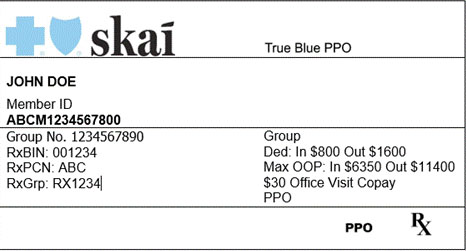
Important update for Nebraska providers: New branding for Arkansas Blue Cross Blue Shield national account members, starting Jan. 1, 2026
- Skai Blue is an approved brand under Arkansas Blue Cross Blue Shield
- These members may present cards that look different from traditional Blue Cross Blue Shield of Nebraska cards
- Please treat Skai Blue cards as you would any other out-of-state Blue Cross Blue Shield card
- Always validate eligibility and benefits by calling the number on the back of the member’s card
Upcoming changes to preferred biologic medications: Humira and Stelara (effective Jan. 1, 2026)
Starting Jan. 1, 2026, we will be removing Humira and Stelara from the following prescription drug lists:
- NetResults Performance
- TraditionalRxList
- ValueRxList
- BluePride RxChoices
Affected medications:
Humira (adalimumab) and Stelara (ustekinumab)
Humira:
- Adalimumab-aaty
- Adalimumab-adaz
- Hadlima
- Simlandi
Stelara:
- Selarsdi
- Steqeyma
- Yesintek
- Starting Jan. 1, 2026: Patients currently on Humira or Stelara will need to switch to a preferred biosimilar alternative for treatment.
- New therapy patients: Patients new to therapy will need to use a preferred biosimilar agent, per policy.
- Preauthorizations: Current preauthorizations extending beyond Jan. 1, 2026, will be transitioned to the biosimilar equivalent medication. Upon expiration, a new preauthorization request for the biosimilar medication will be required as is required today.
Note: These changes do not apply to MA members or members using other BCBSNE prescription drug lists.
Value-based care, quality and risk
The benefit and importance of scheduling AWV/CPE visits for 2026
As we begin 2026, it’s the perfect time to encourage patients to schedule their Annual Wellness Visits (AWV) and Comprehensive Physical Exams (CPEs). These visits are key opportunities to strengthen the provider–patient relationship, promote preventive care, and improve health outcomes across our patient population.
Promotes early detection and preventive care
AWV/CPE visits allow providers to identify risk factors, detect early signs of chronic conditions, and update necessary screenings and immunizations. Early intervention not only improves quality of life but also reduces the cost and complexity of managing advanced disease.
Supports risk adjustment and accurate documentation
These visits provide a dedicated time to review the patient’s complete medical history, update the problem list, and ensure all chronic conditions are accurately captured and documented. Comprehensive documentation supports appropriate risk adjustment, ensures patients receive care aligned with their true health status, and contributes to accurate reimbursement.
Strengthens patient engagement
Regular preventive visits reinforce the importance of proactive healthcare. Patients who consistently attend their AWV/CPE are more likely to follow care plans, adhere to medications, and participate in shared decision-making. This engagement leads to improved satisfaction and long-term outcomes.
Aligns with quality and value-based goals
Scheduling and completing AWV/CPE visits early in the year allows practices to meet quality performance measures and ensure compliance with value-based care initiatives. Early scheduling also helps balance clinic workloads throughout the year and reduces end-of-year pressure.
Encourages a whole-person approach
Beyond physical health, these visits provide a platform to address mental well-being, social determinants of health, lifestyle habits and preventive counseling. Providers can tailor care plans to support the patient’s holistic needs.
Covered benefit for members
Annual Wellness Visits and Comprehensive Physical Exams are covered benefits for Blue Cross Blue Shield of Nebraska members. Encouraging patients to take advantage of this benefit supports preventive health, closes care gaps, and helps ensure members receive the care they deserve at no additional cost to them when billed appropriately.
Key takeaway:
Encourage your patients to schedule their AWV or CPE early in 2026. These visits are not just check-ups; they are essential tools for prevention, documentation accuracy and the overall improvement of patient health outcomes.
Security corner
Think twice before using certain AI tools with patient data
Publicly available Artificial Intelligence (AI) platforms can be helpful in our daily lives, but they’re not HIPAA-compliant. Entering patient information into public AI tools risks exposing protected health information (PHI).
Keep it simple: never share PHI with public AI services, and remind staff to only use approved, secure systems for documentation and analysis. A quick training refresher on safe AI practices can help prevent costly privacy breaches.